1. Haiti, Mar 2010
Developing community educators in Haiti
World Vision International (WVI) is a Christian relief, development and advocacy organization dedicated to collaborating with children, families and communities to overcome poverty and injustice. WVI is also one of the world’s largest non-governmental organizations and its work spans some 97 countries with people and communities from all religions, races, ethnicity and gender. WVI is collaborating with GULL to provide opportunity and access to lifelong learning for the many communities that it serves. The use of GULL in World Vision National Offices initiative is founded on the practical, professional and holistic development that occurs in local communities, where we encourage, recognize and certify the outcomes of action learning. We are especially concerned to provide opportunities to learn for those without the funds, academic qualifications and access to any other form of further and higher education.
In Haiti, GULL is focusing on youngsters in the age range from 17-25. They are now by default, Haiti’s frontline community educators. This group has lost its opportunity to enter and graduate from an academic institution – but they can build their personal and professional skills in the community and help to lead and create an inclusive, community-based model for learning led by Haitians – now and for the future. To better equip these youngsters for their role, they undergo regular on the job training. The GULL system is interlinked with this training to enable the participants to reflect, review and professionalize their roles and to develop others skills by action learning. On completing the foundation level, the initial groups will as part of their own ongoing development to professional Bachelor level, serve as facilitators for new groups. This will enable us to ‘cascade’ to many more youngsters as quickly as possible.
Noah Ochola, World Vision’s senior advisor for children in emergencies comments: “This is a unique opportunity to help Haiti’s children and young adults continue their education and the initiative will help Haiti’s next generation find a future for themselves in this country.”
17-25 year old community volunteers are providing pre-school and continuing education in a creative and highly professional way. They are undertaking a critical role in creating and sustaining a child-friendly environment for young children – many of whom are traumatized by the impact of the earthquake.
Until the earthquake, Dan was a first year law student at university in Port-au-Prince. He was in class when the earthquake happened. He saw the walls shaking and ran for the door – just as the walls collapsed. He does not know how he made it to safety – he was the only survivor – his professor and all his class mates died. The WV team say that Dan is an outstanding community educator. He makes learning fun for the children and he is also teaching them English.
Related | News: GULL at World Vision in Haiti
2. World Vision Pacific Development Group, Papua New Guinea, November, 2010
Launching World Vision’s Pacific Development Group (PDG) work with GULL in PNG
Participants in the GULL approach to action learning in Papua New Guinea met with GULL's Founding Chancellor, Sir Paulias Matane on Monday 1 November 2010 to discuss the role that GULL can play in facilitating self-directed community mobilization.
Meeting with GULL's Founding Chancellor, the 8th Governor General of PNG, Sir Paulias Matane on Monday 1 November, 2010.
David Sweeting, Programme Development Manager, WV PDG, outlined the GULL application:
“Almost two years ago now we went to Bourgainville to find out what Bourgainvillians really need assistance with. We spent close to 18 months talking to the communities and obtaining feedback. The most significant issues highlighted were related to education and community participation and their request was could World Vision assist with this? Arising from that and from talking to Richard Teare and others, we felt that the best approach would be to use action learning so that the initiative can be owned by the communities themselves. The target group for the project is youth and in Bourgainville there are many disenfranchised youth. The yearning for education is there but today's youth get bored easily and if they are not occupied with something productive, they can become disruptive and lapse into drugs and alcohol abuse and so our goal is to design a project that will benefit the youth who have fallen out of the education system and engage them in self-directed learning.”
The need for holistic lifelong learning
Sir Paulias Matane, GULL's Founding Chancellor, poses the question: “‟How do we educate a child?‟ Is it to pass exams and progress on to the next grade or is it to education them for life? If the child is to become a complete human being, he/she must understand that there are three parts of his being – body, mind and spirit – which must be trained and developed properly. Education must help the individual to become a total human being. When I look at the standard of education today and compare it with my own experience of school, there is my view, a significant gap.”
(Above) Sir Paulias Matane, GULL's Founding Chancellor & 8th Governor General, Papua New Guinea
World Vision and GULL overview
“Using GULL, we aim to build the capacity of the person who is standing in front of the youth and the person doing awareness building with the parents because the capacity of our community volunteers is so critical. We want to build them up so that they are confident and enthusiastic and more likely to succeed in developing the competency of others. At that point, we want to recognize them for their efforts. I think that this has been the essence of Sir Paulias' dream for a long, long time so I am very hopefully that this kind of support from GULL is going to make a difference.”
Dr Micael Olsson, Director, Education & Life Skills, World Vision International.
Meeting with the Prime Minister, Papua New Guinea 4 November, 2010
Sir Michael Somare, GULL's Co Chancellor & Prime Minister, PNG: “I am looking forward to hearing about World Vision and especially to a progress report on the Global University for Lifelong Learning. As you know, Sir Paulias Matane and I are great colleagues – we went to school together and we always maintain that education is our key theme. If developed properly, Papua New Guinea is going to be a very rich country and I believe that we can transform this nation.
(Above, centre) Sir Michael Somare, Prime Minister, Papua New Guinea & GULL's Co Chancellor with WV and GULL leaders
GULL planning workshop in Papua New Guinea 1-5 November 2010
The WV PDG team were briefed on the concept of self-directed action learning and the many ways of using the GULL action learning system to interlink WV's training and other activities with evidence of change in the form of learning outcomes (a process that GULL terms outcomes mapping)
Participant reflections and closing remarks:
“During the week, I have come to realize that learning has to be customized so that every GULL participant can resolve their own challenges. Our main purpose at World Vision is to meet the needs of those we serve and support and I see that GULL provides a closely related enabling framework that provides a development pathway for each one of us that we can later pass to others.” - Joseph
(Above) participants at the WV PDG and GULL planning workshop 1-5 November, 2010.
3. Internalizing and cascading the GULL system at World Vision, Seattle, USA January 2011
Reflections on the cascade planning process
World Vision is internalizing the GULL system in order to recognize the individual and collective efforts of those who are causing change and progressive transformation in communities. In 2010, a number of pilot cascades were established in different settings so as to explore ways of starting and sustaining an action learning cascade. The piloting work clearly demonstrated that self-directed action learning can be operationalized on a large scale and that by engaging entire communities in the process, significant outcomes arise. These include growth in individual self-esteem and confidence and the wider implications of collective self-reliance as groups of action learners learn together, pass on their action learning expertise to others and begin to mobilize entire communities.
Community-led action learning
“I am excited about a process and framework that empowers the most vulnerable in our communities. The poorest are unable to realize the Genius of God in them and lack of opportunity means that they are often unaware of their own potential. I believe that the action learning process will enable us to re-focus on God's desire to bring good news to the poor and to enable them to discover the totality of what they are able to do. I also love the fact that the GULL cascading method inverts the pyramid and places the majority at the top so that solutions flow from the people we serve as they determine their own change process. The implications are huge – every person who is touched by this process will be able to support their own community with renewed confidence and there will be a ripple effect that we cannot even imagine at this moment in time.”
- Elinor Alexander Capacity Building Advisor, Education & Life Skills, Global Center, World Vision International
Enriching the learning organization
“I am excited because GULL provides a framework that augments and enriches WV's learning organization concept and embraces our community-based work by equipping and empowering the marginalized. I have always felt that the people who are best placed to find and implement practical solutions are those who are most closely affected by the challenges that need to be addressed. We owe it to all whom we serve to enable this to happen in a more systematic way. The cascade method offers a way of co-creating and sharing this process by releasing the creativity and potential of large numbers of people.”
- Fe Garcia Senior Advisor, Maternal & Child Health, Global Health Center, World Vision International
Responding to disability challenges
“I am excited by the opportunity to participate in GULL as I know that it will enable me to have a greater impact in terms of the work we do with our partner organizations in the global disability movement. In this sphere, it is so important to work with community-based organizations and I can foresee ways in which we can share the GULL process with them. This is an important moment because I have always wondered how we might provide opportunities for the many people I meet in communities who are capable and yet not recognized for the skills they possess.”
- Hitomi Honda Disability Advisor, Global Center, World Vision International
Aligning work with personal and professional development
“Given the time-related challenges we all have, a method that helps me to map the madness is really encouraging. I'm also excited about the opportunity that this initiative will give me to contribute to the bigger picture. I'm looking forward to our team effort as we seek to articulate the journeying process – so that the many with limited or no development opportunity can fully participate.”
- Marla Grassi Support Services Manager, Children in Ministry, Global Center, World Vision International
The potential for self-directed development
“I see GULL as a structure that will enable WV to provide self-directed development pathways for its staff and volunteers that are grounded in everyday experiences and are likely to yield fresh insights, self-confidence and greater maturity. I can see an immediate application – our induction process is relatively narrow and limited and by linking this with GULL we can enrich the experience and help participants to reflect more deeply on their own learning needs and the various ways in which they can contribute to the development of others. Further, we often work in a routine way in accordance with an established model and by reflecting on the actions that are taken we will be able to determine if we are doing the right things and innovate where necessary.”
- Osvaldo Benitez Global Life Skills Work Team / HIV and AIDS Research Development Specialist, World Vision International
 Equipping communities for the future
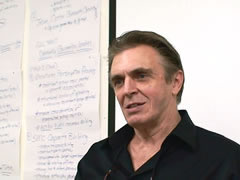
“I have long been committed to the principles of GULL and our collaborative effort will help to institutionalize and operationalize our efforts to recognize and strengthen the communities that we serve. It is a timely initiative and the GULL affiliation enables us to internalize the principles and at the same time, customize the process so that it is flexible and engaging for both WV volunteers and staff. We already have endorsements from several WV national directors and by initiating new action learning cascades in eight African countries during April 2011, the process will build momentum across a range of initiatives in education, life skills development and healthcare.”
- Micael Olsson Director, Education & Life Skills, Global Center, World Vision International
4. World Vision Pacific Development Group, Papua New Guinea, May, 2011
Members of the World Vision Pacific Development Group staff team in Buka, Bougainville, Autonomous Region of Papua New Guinea.
Cascading the GULL approach within World Vision’s Pacific Development Group (PDG) in PNG
Building on the launch of GULL’s work with WV PDG in November, 2010, field training for WV staff and volunteers in Bougainville, Papua New Guinea took place from 9-12 May 2011. A group of 18 local WV staff members were joined for the workshop by volunteers from all the participating communities. The forty-strong group worked closely together to develop an action plan that will enable all the communities to embed the GULL action learning system in WV’s technical training and wider community work. The significance of the event was enhanced by the presence of Curt von Boguslawski, National Director, WV PDG and Trihandi Saptoadi, Regional Director, WV South Asia & Pacific region.
WV PDG are pioneers in framing the process for facilitating the creation of self-reliant learning communities and the GULL cascade started in all the participating communities in Bougainville on 17 May 2011.
Left: Dr Curt von Boguslawski, National Director, WV PDG comments on the role of GULL in facilitating community-based learning:
5. Partnering for Quality Education and Learning Outcomes
World Vision Education & Life Skills Forum, Nairobi, Kenya, 31 May – 2 June 2011
The World Vision Forum brought together key WV staff and representatives from organizations like UNICEF, Save the Children and GULL among others. The purpose was to clarify the role community-based NGOs can plan in contributing to recognized and measurable learning outcomes and to explore partnering arrangements that might enable World Vision and other NGOs to achieve advances – especially in the most remote ‘hard to reach’ communities - globally. The Forum also considered ways of building the capacity of communities in order to strengthen outcomes. The challenge for interested stakeholders was to clarify just what role community-based NGOs could play in contributing to quality education and recognized and measurable results. Further, to explore how stakeholders might best partner with one another to minimize redundancies across the collective organizational effort.
 In order to improve educational opportunities for an estimated one billion children in hard to reach areas, World Vision is establishing a number of strategic partnerships and will take the lead on life skills development. The over-arching objective is to build the capacity and self-reliance of communities and to enable volunteer community educators and others in fields such as healthcare to professionalize their work and attain recognized qualifications.
(Right) Forum participants 2 June 11
GULL, life skills development and action learning
Representatives from 22 World Vision Partnership offices attended the Forum: WV Burundi; WV Cambodia; WV Canada; WV East Africa Region; WV Ethiopia; WV Germany; WV Haiti; WV India; WV Kenya; WV Latin America Caribbean Region; WV Malawi; WV New Zealand; WV Papua New Guinea; WV Rwanda; WV Somalia; WV South Sudan; WV Swaziland; WV Tanzania; WV Uganda; WV United States; WV Vietnam; WV West Africa Region.
Participating World Vision representatives were invited to respond to the array of partnering opportunities offered at the event. The response to GULL and its methodology for building self-reliance across entire communities was overwhelming:
Implementing GULL's system of action learning in WV National Offices – a three year plan
World Vision National Offices in many countries will adopt GULL during the next three years and to facilitate this, the launch process will include regional forum and master trainer sessions. All participating countries will ‘cascade’ action learning via their Area Development Program staff teams. This is likely to be the world’s largest action learning project, focused on the poorest communities on earth.
6. Recognising the impact of community volunteers
The Global University for Lifelong Learning comes to World Vision
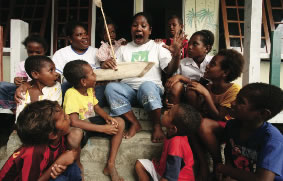
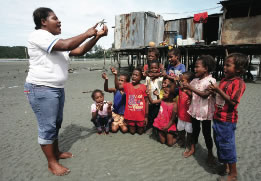
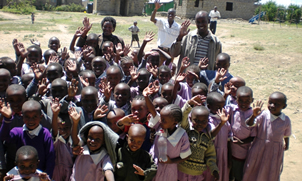
The video here profiles the mission of GULL and the outcomes of a GULL pilot in a World Vision office in Narok, Kenya. The video features reflections on the outcomes by the World Vision Kenya National Director, Education Coordinator, Area Development Program Manager and a World Vision Volunteer. They comment on the ways in which the process of action learning and GULL recognition is helping to address the problem of adult illiteracy among the Maasai population. Below: ‘Recognising the impact of community volunteers’
World Vision (WV) has collaborated with the Global University for Lifelong Learning (GULL) to provide a global capacity building system. Our goal is to professionalise and recognise the contribution of community volunteers and staff through action learning. ‘Capacity building’ is a process that enables people to develop in contextually appropriate ways and our vision is to encourage self-directed individual and community development.
7. World Vision Mexico
In January 2011, a link was established in Tijuana, Mexico, between the World Vision (WV) Early Childhood Development (ECD) process and GULL’s action learning system. A number of volunteers who assist WV in Tijuana, began their GULL journey at that time and on 20 October, 2012 they attained their GULL professional Bachelor degree. The first video draws on their experiences and achievements at GULL and WV recognition ceremony (in Spanish and English) which the volunteers organized themselves in their community hall.
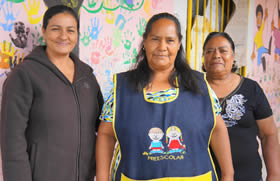 World Vision Life Skills specialist Patricia Hartasanchez reflects on the outcomes achieved by the WV volunteers:
At the outset, the ECD with GULL participants (WV volunteer workers) didn’t have much self-esteem and they didn’t feel that they had the capacity to work with others or to facilitate change. However, when we began the community projects, we were amazed to find that they had many ideas. So instead of staying solely with the early childhood theme, they decided among other things, to build a bridge that made the journey to school much easier and safer for children and to establish a health and nutrition project for a large number of elderly people.
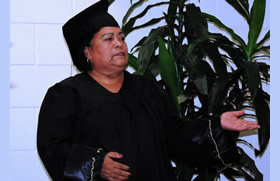 It was amazing how they obtained the funds to implement these projects - they also worked on their own environment – for example, they mobilized many people in their community to clean a river and some of their neighbourhood streets. Seven of the participants were women and as volunteers, they do not receive a salary and yet they have become excellent leaders in their community and outstanding role models and ambassadors for WV and the GULL process. Patricia continues: One of the volunteers (Juanita, aged 67) is working with 300 elderly people and it is beautiful to see how this group is learning together about nutrition and family nurture. Can you imagine this? People in their 70s and 80s experiencing a new, active form of learning and achieving personal growth? This large group is now helping their own sons and daughters to be better parents by demonstrating newly developed grand-parenting skills.
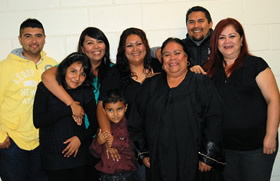 In so doing, they are helping to change the mindset and attitudes of their own children in relation to parenting and education. Juanita comments: “The first changes I was able to make were personal and family-related. There were many changes and these greatly helped to improve the relationships between family members. When I started with the GULL professionalization process, my children and grandchildren were encouraging me in terms of improving my work in support of early childhood development and the elderly. Now I know that our family relationships are stronger and by sharing what I learnt during my GULL journey I can see significant changes in my family and in the wider community.”
In the second video recorded after the graduation event in October 2012, Patricia Hartasanchez reflects on the outcomes of the World Vision Mexico with GULL pilot for community volunteers.
8. World Vision Burundi
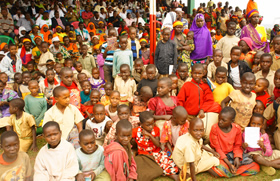
The GULL system is being used by World Vision teams in Rwanda and Burundi and by Tearfund teams in both countries. World Vision Rwanda (WVR) is integrating GULL with their community partnership work in specialist areas like agriculture and micro enterprise and with specific groups such as vulnerable young adults. As with most GULL applications, the lead team identifies the best starting points and pathway designs. In mid-2014, Elysee Nibitanga, Area Development Program (ADP) Coordinator, World Vision Burundi (WVB) Gasorwe and GULL Master of Professional Studies participant, introduced GULL to WVB’s volunteers in the Gasorwe ADP, Muyinga Province. As their project, the community participants sought to find ways of reducing serious and widespread levels of child malnutrition. The project involved establishing a soya milk production facility in the community.
During a WVB with GULL review visit to the soya milk production facility on Friday 7 November 2014, the community members told us that as an outcome of their GULL project, they have completely eradicated child malnutrition in their commune. They have secured this outcome by organizing the distribution of soya milk to vulnerable children over a wide geographical area spanning 29 hills and valleys. Soya milk is distributed free of charge to the parents of sick children and when the problem of malnutrition has been addressed, the milk is then sold to parents to prevent re-occurrence. If families do not have the funds to buy the soya milk, the community’s benevolent fund is used to cover the cost and a community team trains and supports the family until they are able to generate enough income to pay for the soya milk from their own resources. The soya milk production facility is now producing a cash surplus for the community and they will use their profits to increase the production capacity. After securing these valuable and tangible outcomes, the soya milk production team (among other WVB with GULL project teams) had earned their GULL professional awards – some at Diploma and others at Entry or Certificate levels.
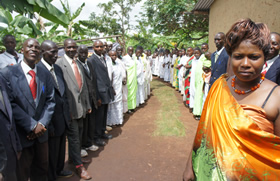
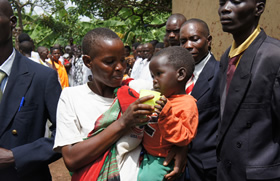
A report based on the WVB with GULL project review meeting held on 7 November 2014 is accessible from the link: WVB with GULL capacity-building review.
The WVB with GULL project also features in the video recorded on 7 November 2014. WVB National Director Albert Siminyu explains how GULL has enabled WVB to greatly enhance the outcomes of its work in selected locations.
9. World Vision Papua New Guinea
In 2013, 80 volunteers and 20 staff received GULL certificates reflecting different levels of achievement and among the outcomes, Education Management Committees and volunteers in Madang established 10 community learning centres for children aged between 3-13. Additionally, two learning centres in Central Bougainville are now self-sustaining as an outcome of the WV PNG with GULL pathway.
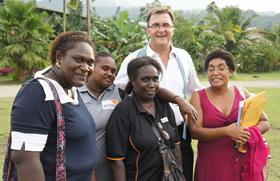
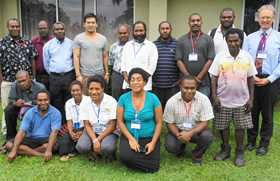
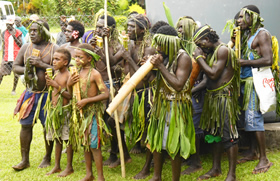
In 2014, World Vision Papua New Guinea (WV PNG) began to link WV’s integrated competency development (ICD) approach with GULL. In recognition of her innovative work, GULL core team member Grace Heaoa won a WV award for successfully developing pathways that strengthen the capacity, self-awareness and competency of WV PNG staff and volunteers.
A number of country office staff who are participating in the ICD with GULL pathway were able to celebrate completion of their foundation stage work on 16 April 2015 and the three video clips draw on comments made by WV PNG leaders and participants at this event. In the first video, Dr Curt Boguslawski, Country Director, WV PNG talks about the role of GULL in staff and volunteer development. In the second, Programme Quality Lead, Stephen Milford talks about his own action learning journey with GULL. The next step is to widen access to GULL and among others, WV staff and volunteers involved in administering the national Tuberculosis (TB) programme will also participate. In the third video clip, Valda Kereu, one of WV PNG’s TB coordinators, shares her personal development experiences to-date.
During the period 2009 – 2015, World Vision and the Global University for Lifelong Learning have collaborated on the design of personal and professional development pathways and volunteer capacity-building in Kenya, the USA, Haiti, Papua New Guinea, Mexico, Sri Lanka, Lebanon, Burundi, Rwanda, Mongolia and El Salvador. The resource below profiles these initiatives – most of which are on-going.
WV with GULL example applications (PDF)
How can my organization get involved?
Thank you for reading this case study. Do please think about what you can offer and how you might inspire others in your organization to get involved. Together, we can bring hope and opportunity to the many people around the world who do not have access to lifelong learning. GULL works with organizations that share our vision for universal access to learning in the workplace and in the community. If you would like to affiliate with GULL's network movement, please review the 'Affiliation' section at the GULL website - www.gullonline.org. There are no membership fees or other barriers to participation - we'd like to work with you to harness all the skills and abilities that your organization can offer in order to help others to learn, grow and develop. Please note though that GULL does not have the resources to support individual learners and it is for this reason we can only correspond with organizations via their nominated representative(s).
GULL is a not-for-profit foundation registered in California, USA. GULL is recognized by the Government of Papua New Guinea & endorsed by other Governments, Leaders & Institutions.